Tokenized Real World Assets Explained: A Clear Beginner’s Guide
Contents
Tokenized real world assets explained in simple language usually start with one idea:
turning ownership of physical or traditional assets into digital tokens on a blockchain.
This guide breaks that idea into clear parts so you can see how tokenization works,
why it matters, and where the main risks sit today.
What Are Tokenized Real World Assets?
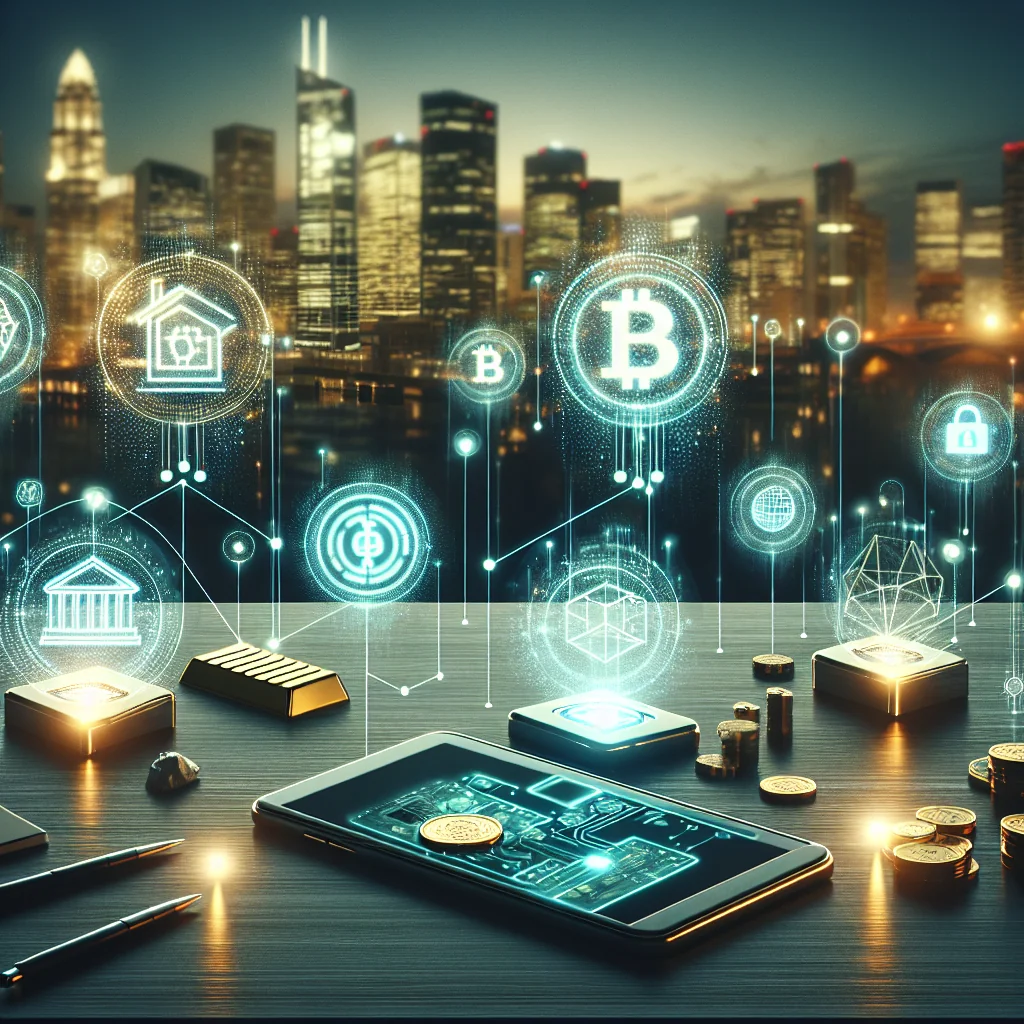
Tokenized real world assets, often called “RWAs,” are physical or traditional financial assets
represented as digital tokens on a blockchain. The token stands for a claim on the underlying asset.
That asset can be a house, a gold bar, a stock, a bond, or even an invoice.
In simple terms, tokenization turns rights to an asset into pieces of code.
Those pieces, or tokens, can be sent, stored, and traded like other crypto tokens,
while still being linked to the real asset through legal and technical structures.
The key idea is that the token is not the asset itself. The token is a digital wrapper
that represents ownership or some defined right over that asset.
How Tokenization Works Step by Step
To get tokenized real world assets explained clearly, it helps to walk through the process.
Different projects use different details, but the core steps tend to look similar.
Below is a simple ordered list of the main stages you will see in most RWA tokenization setups.
- Asset selection and checks – A company or issuer chooses the asset to tokenize and reviews ownership, legal status, and value.
- Legal structure and ownership wrapper – The asset moves into a legal vehicle, such as a company, trust, or special purpose entity.
- Token design and smart contract – Developers create a smart contract that defines supply, transfer rules, and holder rights.
- Custody and asset management – A custodian or asset manager holds and manages the real asset under agreed rules.
- Issuance and distribution – Tokens are created and then sold or allocated to investors through a platform or private deal.
- Secondary trading and settlement – Investors trade tokens on compatible markets, while ownership updates on-chain.
Each stage must line up: if the legal wrapper or custody breaks, the token loses meaning.
The value of RWA tokens depends on both the blockchain logic and the off-chain legal and operational setup.
Types of Assets That Can Be Tokenized
Tokenization can apply to many asset classes, but some are more common than others.
These groups show how broad the concept has become and why investors treat each group differently.
Understanding each type helps you judge risk, liquidity, and how stable the value might be over time.
Real Estate and Property
Real estate is one of the most popular uses for tokenized real world assets.
A building or a piece of land can be placed into a legal entity, which then issues tokens.
Each token might represent a fraction of ownership or a share of rental income.
This structure can lower the minimum investment size and allow partial exit,
since investors can sell some tokens instead of the whole property.
Commodities and Physical Goods
Commodities such as gold, silver, or oil can be stored in a vault or facility,
then represented as tokens. Each token often stands for a fixed unit,
like one gram of gold or one barrel of oil.
The main question here is trust in the custodian. The token is only as good as the promise
that the commodity really exists and can be redeemed under clear terms.
Financial Instruments and Credit
Bonds, loans, invoices, and other credit products can also be tokenized.
In this case, tokens might represent claims on interest payments or repayment of principal.
Some DeFi projects use tokenized treasury bills or money market funds as “on-chain cash”
or collateral. Others tokenize invoices or trade finance assets to help businesses raise funds.
Comparing Major Tokenized Asset Categories
The short table below compares three common RWA groups so you can see how they differ
in use case, liquidity, and typical risks.
| Asset Category | Typical Use Case | Liquidity Level | Main Risk Focus |
|---|---|---|---|
| Real estate | Fractional investment and income sharing | Low to medium | Property law, tenant risk, local rules |
| Commodities | Store of value and hedging | Medium to high | Custody, storage, and redemption terms |
| Credit and bonds | Yield generation and lending markets | Varies by issuer | Default risk and legal claims |
Each category needs its own analysis. A token backed by a vault of gold behaves very differently
from a token backed by a single rental property or a pool of loans.
Why Tokenize Real World Assets at All?
Tokenization is often promoted as a way to improve traditional markets.
The benefits are real in some cases, but they depend on design and regulation.
These are the main advantages that supporters highlight for tokenized RWAs.
First, tokenization can improve access. Smaller investors can buy fractions of high-value assets,
such as commercial buildings or fine art. This can spread risk and open new markets.
Second, tokenization can improve transfer speed and settlement. Blockchain transfers
can update ownership in minutes or seconds, rather than days. This can reduce back-office work.
Third, tokens can be programmable. Smart contracts can automate interest payments,
redemption events, or compliance checks. That automation can lower manual errors.
Key Risks and Challenges of Tokenized RWAs
Any honest guide to tokenized real world assets explained must cover risks.
Tokenization does not remove traditional risks, and sometimes adds new ones.
Thinking through these points helps you judge if a project is serious or just hype.
Legal and Regulatory Uncertainty
Token holders need clear legal rights. In some places, laws do not yet fully define
how token ownership links to property or securities law. This gap can cause problems
if a dispute or bankruptcy occurs.
Many RWA tokens are likely treated as securities. That means strict rules on who can invest,
how tokens can be sold, and what disclosures are needed.
Custody and Counterparty Risk
A token is only as safe as the entity that holds the asset. If a vault operator,
trustee, or asset manager fails or acts badly, token holders may lose value.
This is a key difference from native crypto assets like Bitcoin,
where the asset itself lives on-chain. RWA tokens always rely on off-chain parties.
Smart Contract and Technology Risk
Bugs in smart contracts can freeze or drain tokens. Poor key management can lead to loss of control.
Even large projects have seen contract issues in the past.
Security audits help, but no system is perfect. Users should check if a project
has been reviewed by credible auditors and how they handle upgrades or emergencies.
How Tokenized Real World Assets Interact With DeFi
One reason RWA tokenization gets attention is the link with decentralized finance (DeFi).
DeFi platforms can accept RWA tokens as collateral, trading pairs, or yield sources.
This link can bring real-world yield on-chain but also connects DeFi to off-chain events.
For example, a DeFi protocol might accept tokenized treasury assets as collateral for loans.
If the issuer of those tokens fails or breaks rules, the DeFi protocol and its users suffer,
even if the smart contracts work as expected.
This blend of on-chain and off-chain risk is new territory.
It calls for careful design, clear disclosures, and strong risk controls on both sides.
Evaluating a Tokenized Real World Asset Project
Before trusting or using any RWA token, you can ask a few simple but powerful questions.
These questions help you see past marketing and focus on structure and safety.
Use this as a mental checklist whenever you see tokenized real world assets explained in a pitch.
Key questions to ask about any RWA token project:
- What exactly does the token represent? Ownership, a claim on cash flows, or something else?
- Who holds the underlying asset? Is there a named, regulated custodian or trustee?
- What is the legal link? How does the law connect token holders to the asset or entity?
- Which jurisdiction applies? Where is the legal entity based, and what rules apply?
- How is value calculated? Is there a clear method for pricing, and how often is it updated?
- What are the fees? Who gets paid for custody, management, or platform services, and how much?
- Is there an exit path? Can tokens be redeemed for the asset or cash, and under what terms?
- Has the code been audited? Are audit reports public, and are they from known firms?
Clear, public answers to these questions are a good sign. Vague responses,
or no documentation, are red flags that suggest higher risk.
Future Outlook for Tokenized Real World Assets
Many large financial institutions and startups are testing tokenization.
Some focus on internal efficiency, others on new products for clients.
The long-term picture depends on how law, technology, and demand develop.
In a positive case, more assets move to token-based systems under clear rules.
Settlement becomes faster, access widens, and DeFi and traditional finance connect in safer ways.
In a weaker case, tokenization stays niche, used only in certain markets
or for limited investor groups due to regulation and trust issues.
Reality may land between these two, with some asset classes moving faster than others.
Bringing It All Together: Tokenized Real World Assets Explained Simply
Tokenized real world assets turn rights to physical or traditional financial assets into digital tokens.
The promise is faster trading, wider access, and programmable features. The trade-offs are extra legal,
custody, and smart contract risks.
If you remember three things, remember this: always ask what the token really represents,
who you rely on off-chain, and how clear your legal rights are.
With those questions in mind, you can read any RWA pitch with a sharper, more informed eye.